Emergency Smoke Damage Restoration in Auburn
Emergency smoke damage restoration in Auburn and surrounding areas. Insurance billing accepted. Call (508) 756-8800.
Smoke damage emergency in Auburn? Call now for emergency service at (508) 756-8800. Smoke moves through a house long after the flames are out, settling into drywall pores, fabric fibers, and HVAC ductwork within hours. A fire in one room can leave acidic residue coating surfaces two floors away, and the longer that residue sits, the harder it bonds to paint, metal, and grout. If you’re smelling smoke days after a fire, or after a nearby wildfire or brush fire pushed smoke into your home through vents and window seams, that odor is a sign residue is still active, not fading on its own.
What smoke damage restoration actually involves
Smoke damage restoration is different from general fire cleanup because it targets residue and odor rather than structural char. Soot particles are acidic and microscopic, which means they travel through air currents and settle on cool surfaces like mirrors, chrome fixtures, and HVAC coils long before anyone notices a visible film. The work typically includes cleaning hard surfaces, treating porous materials like drywall and insulation, running HVAC and duct cleaning, and addressing contents separately from the structure itself. Timeline depends heavily on how long the residue sat before cleanup started and whether the fire was protein-based (a kitchen or grease fire, leaving a thin, hard-to-see but strong-smelling film) or synthetic (burning plastics, furniture, or electronics, leaving thicker, sticky black soot). Equipment ranges from HEPA air scrubbers and thermal foggers to hydroxyl generators for odor neutralization, chosen based on what actually burned.
Our process
- Soot characterization. We identify whether residue is protein-based, synthetic, or a combination, because each type requires a different cleaning agent and approach. Using the wrong cleaner on protein soot can set the smell permanently into surfaces.
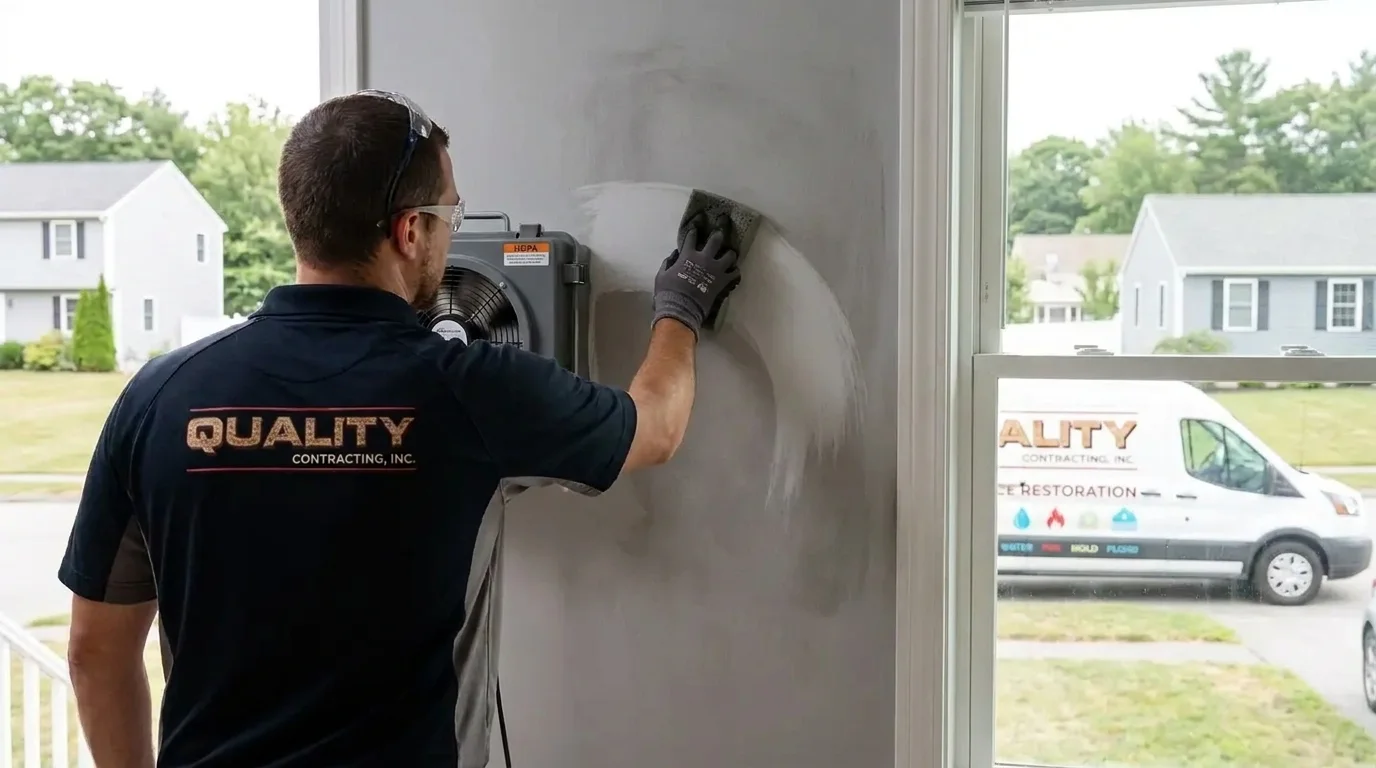
- Pre-cleaning and surface treatment. Dry sponging and vacuuming removes loose soot before any wet cleaning begins, since wiping dry soot with a damp cloth can grind it deeper into porous materials.
- Thermal fogging or ozone treatment. For odor that’s penetrated beyond the surface, we use thermal fogging to drive deodorizing agents into the same pathways the smoke traveled, or ozone treatment in unoccupied spaces to break down odor molecules at the source.
- HVAC and duct cleaning. Ductwork recirculates smoke odor through the house every time the system runs, so this step is often what determines whether an odor actually stays gone.
- Contents cleaning and sealing. Salvageable fabrics, electronics, and belongings get cleaned separately, and affected surfaces are sealed with an odor-blocking primer before repainting.
What separates a good smoke damage response from a bad one
The most common mistake is treating smoke damage like a surface cleaning job and stopping once a room smells better to the nose standing in the doorway. Odor that seems gone at room temperature often returns on a humid day or when the heat kicks on, because residue trapped in subfloor, insulation, or duct lining never got addressed. Masking agents and air fresheners cover odor temporarily without removing the acidic residue causing it, and that residue continues etching into metal and glass the longer it’s left untreated. Insurance adjusters evaluating a smoke claim typically look for documentation of affected square footage beyond the visible burn area, since smoke migration often extends well past the room of origin, and for evidence that HVAC systems were inspected and cleaned, not just the living space.
What does smoke damage restoration cost?
Costs vary widely based on how far smoke traveled, whether soot is protein or synthetic, and whether HVAC and contents are involved. Every loss is different, which is why Quality Contracting, Inc. provides a written scope of work before any cleaning begins. Homeowners insurance typically covers smoke damage restoration when it results from a covered fire event, though policies differ on contents cleaning and odor remediation limits.
| Scenario | Typical range |
|---|---|
| Single room, light surface soot | $500 - $1,500 |
| Whole-room deep clean with odor treatment | $1,500 - $4,000 |
| Multi-room smoke migration | $4,000 - $10,000 |
| HVAC and duct cleaning (added) | $500 - $2,000 |
| Whole-house smoke and odor remediation | $8,000 - $25,000+ |
Seasonal & regional considerations
Auburn’s winters push more wood stoves, fireplaces, and space heaters into daily use, which raises the number of small kitchen and heating-related fires that produce protein-based soot. Older homes throughout Worcester County, many built with plaster walls and original ductwork, tend to hold odor longer than newer construction because plaster and old insulation absorb residue more readily than modern drywall. Periods of regional wildfire or brush-fire smoke can also push odor into homes through window and door seals even without direct fire contact, which is its own form of smoke damage that still needs structural treatment.
Service area
Quality Contracting, Inc. handles smoke damage restoration for homes and businesses in Auburn and throughout the surrounding Worcester County communities.
If your home still smells like smoke after a fire, waiting lets that residue bond deeper into your walls, floors, and belongings. Call (508) 756-8800 to begin smoke and soot removal before odor sets in permanently.
Services We Handle
- Soot Removal
Frequently Asked Questions
Does homeowners insurance cover smoke damage restoration?
What's the difference between protein soot and synthetic soot?
Will my house still smell like smoke after cleanup?
Do you need to clean the HVAC system after a fire?
Can furniture and electronics be cleaned instead of replaced after smoke damage?
Looking for the best smoke-damage-restoration company in Auburn?
Quality Contracting, Inc. provides smoke-damage-restoration in Auburn, MA and the surrounding area. Customers rate us 4.5 out of 5 stars across 110 Google reviews. We answer calls 24/7 — call (508) 756-8800 for immediate help.
Need smoke-damage-restoration now?
We respond 24/7 across Auburn and surrounding MA cities.
Related Coverage
- Our Restoration Services
- Contact Quality Contracting, Inc.
- Restoration Services in Bellingham
- Restoration Services in East Douglas
- Restoration Services in Fiskdale
- Restoration Services in Framingham
- Restoration Services in Franklin Town
- Restoration Services in Hopkinton
- Restoration Services in Hudson
- Restoration Services in Leominster
- Restoration Services in Marlborough
- Restoration Services in Maynard
- Restoration Services in Milford
- Restoration Services in Natick
- The Fire Damage Restoration Process, Explained